


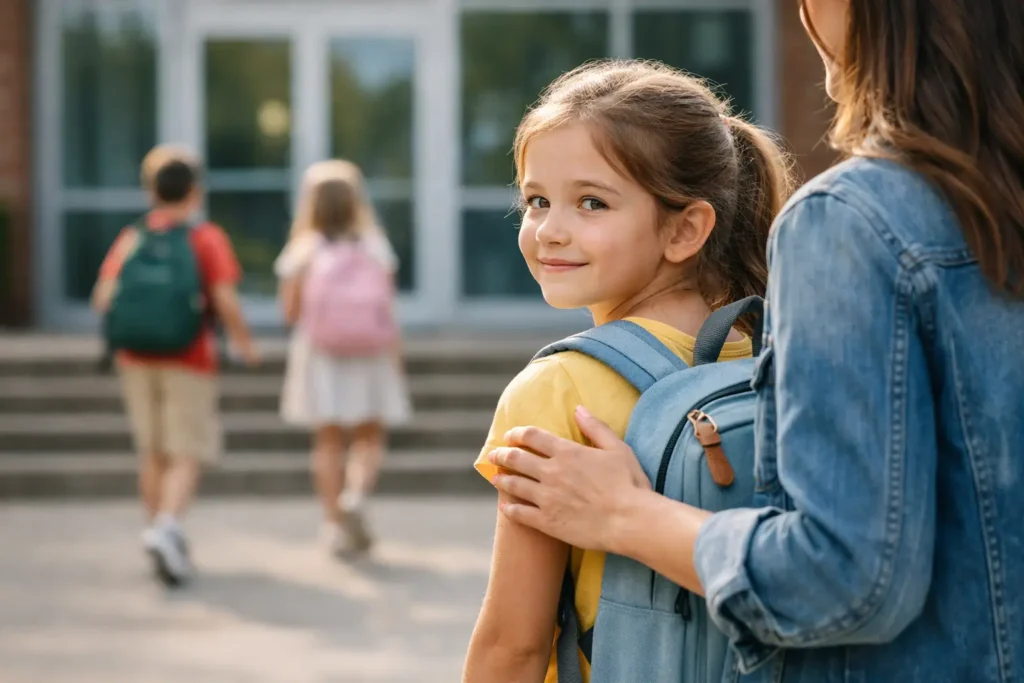
A new school can begin with a child standing in an unfamiliar hallway, trying to remember a teacher’s name while wondering where to sit at lunch. Even a confident student may feel unsettled. Knowing how to support children changing schools means preparing for more than enrollment forms and new uniforms. It means giving them steady emotional reassurance, academic continuity, and practical ways to feel that they belong.
For families relocating across states or countries, the change can be even more complex. A child may be adjusting to a new curriculum, teaching style, language environment, or assessment system at the same time. With thoughtful support, however, a school move can become an opportunity to build resilience, independence, and confidence.
Start the Conversation Before the First Day
Children often fill information gaps with their own worries. They may fear being behind academically, not making friends, getting lost, or being compared with classmates who have been at the school for years. Start talking early and make room for honest answers rather than rushing to reassure them.
Ask open questions such as, “What feels most exciting about the new school?” and “What are you most worried might happen?” Listen carefully, even if their concern seems small. A child who is worried about finding the restroom is not being dramatic. They are asking for a sense of control in a place where many details are unknown.
Be positive without promising that every day will be easy. Instead of saying, “You will make friends right away,” try, “Making friends can take time, and we can think of a few ways to help you meet people.” This approach validates their feelings while showing that challenges can be managed.
Make the Unknown More Familiar
Whenever possible, visit the school before the first day. Walk the route, locate the main office, classroom areas, cafeteria, library, and pickup point. If an in-person visit is not possible, review photos, maps, the school website, or a virtual tour together.
For younger children, role-play the morning routine at home. Practice packing the backpack, opening lunch containers, and saying hello to a teacher. For older students, review the daily schedule and discuss practical questions: Where will they keep their belongings? How does homework get assigned? Who can they ask for help if they feel lost?
A small amount of preparation can prevent a large amount of first-day anxiety.
Create a Clear Academic Transition Plan
A school change does not always mean a change in academic level, but it can. Different districts, countries, and curricula sequence topics differently. A student moving from CBSE or ICSE to an American school, for example, may find familiar math concepts taught in a different order. A learner joining an IB, IGCSE, British, Cambridge, or Edexcel program may need time to understand new command terms, coursework expectations, and assessment formats.
Request the new school’s curriculum outline, course descriptions, and reading lists as early as you can. Compare them with your child’s recent work, report cards, and teacher feedback. Look for gaps as well as areas where your child may already be ahead. The goal is not to turn the transition into an intensive catch-up project. It is to identify the few subjects or skills that need focused attention.
Keep a simple academic file with recent assessments, samples of writing, learning plans, and any support documentation. This helps teachers see the whole child rather than making assumptions based on a single placement test. If your child has learning differences, language needs, or an accommodation plan, arrange a conversation with the appropriate school staff before classes begin.
Prioritize Confidence Before Perfection
The first weeks are rarely the right time to demand flawless grades. A student is using mental energy to learn routines, names, expectations, and social cues. Temporary dips in performance can happen, particularly in writing-heavy subjects, advanced math, or classes with unfamiliar assessment styles.
Set one or two realistic academic goals for the first month. These might be completing homework independently, asking one question in class each week, or learning how to use the school’s online learning platform. Small wins rebuild a child’s sense of capability.
Personalized online tutoring can be especially helpful when a family needs continuity across school systems. A tutor who understands the child’s current curriculum and the new one can reinforce core concepts, explain unfamiliar approaches, and create a manageable learning plan without adding pressure to an already full schedule.
Help Your Child Build Belonging, Not Just Friendships
Parents naturally worry about whether their child will make friends. While friendships matter, belonging is broader. It includes feeling safe to speak in class, knowing where to go for help, taking part in activities, and believing that there is room for them in the school community.
Encourage your child to join one activity that matches a genuine interest, whether that is robotics, art, soccer, debate, music, volunteering, or a cultural club. Shared interests make conversation easier because there is already something to talk about. For an introverted child, one smaller club may feel far more manageable than a crowded social event.
You can also help them prepare a few simple conversation starters. “What did you think of that assignment?” or “Do you know where the science lab is?” can be enough to begin. Avoid pressing for daily friendship updates, which may make a child feel that social success is being monitored. Instead, ask broader questions about their day, then listen for patterns over time.
Keep Home Predictable During a Big Change
A new school creates uncertainty. Home should provide a reliable counterbalance. Keep bedtime, meals, screen limits, homework time, and weekend routines as consistent as possible during the first month. Predictability helps children regulate stress, especially when they are too young or too overwhelmed to explain what they are feeling.
Build in a short daily check-in that does not feel like an interrogation. Some families talk while walking the dog, driving home, or preparing dinner. A simple “high, low, and help” routine can work well: one good moment, one difficult moment, and one thing they may need help with tomorrow.
Watch for signs that adjustment is becoming more than ordinary nerves. Ongoing stomachaches, sleep changes, withdrawal, persistent tears, school refusal, anger, or a sharp decline in academic engagement deserve attention. Speak with the teacher, school counselor, or a qualified mental health professional when concerns persist. Early support is a sign of care, not failure.
Partner With Teachers Without Taking Over
A brief, respectful introduction to teachers can make a meaningful difference. Share relevant context, such as a recent move, a curriculum change, a language transition, or a topic your child finds challenging. Ask what the first few weeks typically look like and how the school communicates concerns.
Then give your child space to develop their own relationship with the teacher. Older students, in particular, benefit from practicing self-advocacy. Encourage them to ask for clarification, attend extra help sessions, and communicate when an assignment is unclear. You can coach them at home without stepping into every conversation for them.
It also helps to understand that every school has its own culture. Some teachers expect frequent parent communication, while others prefer students to take the first step. Adapt to the school’s process while remaining a calm, informed advocate for your child.
Support Children Changing Schools Across Borders
International moves often involve a double transition: adapting to a new school and grieving what was left behind. Children may miss close friends, familiar foods, grandparents, traditions, or the feeling of knowing how things work. Give them permission to miss their former home while becoming curious about their new one. These feelings can exist together.
Maintain meaningful connections with the past through scheduled video calls, photos, favorite family routines, or letters to old friends. At the same time, create new rituals that make the new location feel like home. It could be a weekly visit to a local park, trying one new neighborhood activity, or choosing a special after-school snack for Fridays.
For globally mobile families, continuity in learning can be a powerful anchor. Zola Learning Academy provides personalized online academic support across major international curricula, helping students strengthen skills and regain momentum while they settle into a new educational environment.
Give the Transition Time to Work
Most children do not adjust in a straight line. One day may feel hopeful, followed by a difficult morning or an unexpected wave of homesickness. That does not mean the move is going badly. It means your child is processing a real change.
Celebrate effort that is easy to overlook: walking into class despite nerves, learning a classmate’s name, raising a hand, completing a first assignment, or asking for help. These are the building blocks of confidence. With patient guidance, consistent routines, and the right academic support, a new school can become more than a place your child attends. It can become a place where they grow into their next, stronger self.