






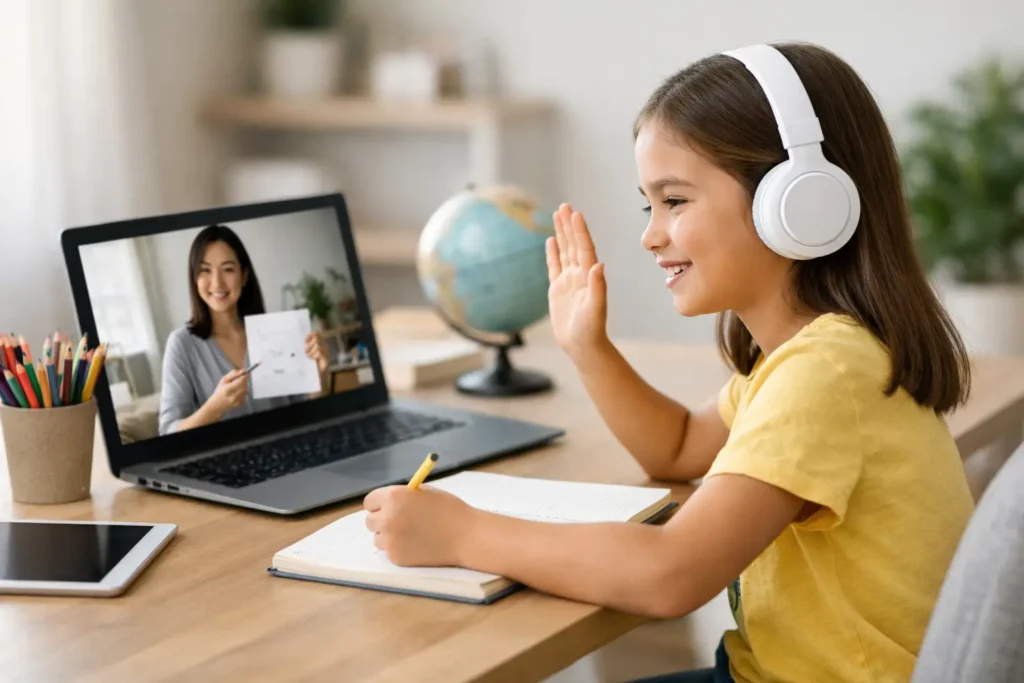
A child who breezes through math may freeze during writing. Another may speak confidently in class but struggle to keep up with reading homework once the school day ends. This is exactly why personalized online classes for kids have become such a valuable option for families – they meet children where they are, not where a standard lesson plan assumes they should be.
For many parents, the real challenge is not finding more education. It is finding the right kind of support. Children learn at different speeds, respond to different teaching styles, and carry different academic and emotional needs into every lesson. When learning is tailored to the student, progress stops feeling forced and starts becoming more natural, consistent, and visible.
What personalized online classes for kids actually mean
Personalized learning is often misunderstood as simply giving one-on-one attention. That is part of it, but true personalization goes further. It means instruction is shaped around a child’s grade level, curriculum, strengths, gaps, pace, and goals.
For one student, that may mean rebuilding confidence in foundational concepts before moving ahead. For another, it may mean stretching beyond school expectations with advanced reading, problem-solving, or exam-focused preparation. The point is not to make learning easier. The point is to make it more effective.
In an online setting, this can be especially powerful. Lessons can be scheduled around a family’s routine, matched to a specific curriculum, and adjusted in real time as a student improves or needs extra reinforcement. Instead of trying to fit the child into a rigid system, the system adapts to the child.
Why families are moving toward personalized support
Many parents first look for tutoring after seeing a dip in grades. But academic performance is usually only one part of the picture. A child may be distracted in a crowded classroom, reluctant to ask questions, overwhelmed by curriculum changes, or simply underchallenged.
That is why personalized online classes for kids appeal to families across so many age groups and school systems. They offer focused support without requiring parents to compromise on safety, convenience, or quality. For globally mobile families and students in international curricula, they also provide continuity. A child can keep learning with structure and expert guidance even through school transitions, relocations, or changing academic demands.
This flexibility matters. A student following IB may need a very different learning approach from one in CBSE or an American curriculum classroom. Even two children in the same grade may need completely different lesson pacing. Personalization respects those differences instead of treating them as problems.
The academic benefits go beyond higher grades
Better grades are often the most visible result, but they are not the only one. When a child receives targeted teaching, they spend less time sitting in confusion and more time building genuine understanding.
That shift changes everything. Concepts become clearer. Practice becomes more purposeful. Mistakes become useful feedback instead of a source of embarrassment. Over time, students often become more willing to participate, more independent in their study habits, and more resilient when work becomes challenging.
This is especially important in subjects that build cumulatively, such as math, science, and language development. If foundational gaps are missed, students can appear to be falling behind when the real issue is that earlier concepts were never fully secured. Personalized instruction identifies those gaps early and addresses them before they become larger obstacles.
For high-achieving students, the value is different but just as significant. They may not need remediation. They may need extension, deeper analysis, or a pace that keeps them engaged. Personalized classes can provide challenge without pressure and ambition without burnout.
Confidence, motivation, and emotional wellbeing
Children do not separate learning from emotion as neatly as adults sometimes expect. A student who feels anxious, unheard, or constantly behind will rarely perform at their best. Academic support works best when it recognizes the child as a whole person.
This is one of the strongest arguments for a more personalized model. When students are taught in a way that suits them, they often feel safer asking questions and more comfortable making mistakes. That emotional safety can have a direct impact on performance.
A nurturing tutor does more than explain content. They notice hesitation, celebrate progress, and help students develop habits that support long-term growth. For some children, the first breakthrough is not a test score. It is the moment they say, “I think I can do this.”
That kind of confidence carries into school, homework routines, and even social settings. A child who feels capable in learning often becomes more willing to participate, express ideas, and take healthy academic risks.
What to look for in online classes for your child
Not every online program that uses the word personalized truly delivers it. Parents should look beyond marketing language and ask practical questions about how instruction is designed.
A strong program begins with understanding the learner. That includes current performance, school curriculum, learning preferences, and goals. It should also provide flexibility in scheduling and enough consistency for a child to build trust with the tutor.
Curriculum alignment is another major factor. If your child is studying under CBSE, ICSE, IB, IGCSE, British, Cambridge, Edexcel, or the American curriculum, the tutor should know that framework well. Subject knowledge alone is not enough. The teaching must match the way your child is being assessed and expected to think.
Parents should also pay attention to communication. The most effective learning partnerships keep families informed about progress, strengths, and areas that need attention. When parents understand what is happening in lessons, they can support learning at home without feeling like they have to become the teacher.
Personalized does not always mean one-size-fits-one
There is a useful nuance here. Personalization does not always require only one-on-one classes. For some children, individual sessions are ideal because they need intensive support or a highly customized pace. For others, a small-group setting can be just as effective if students are carefully matched by level and goals.
It depends on the child’s personality, subject needs, and stage of learning. A shy student may thrive in one-on-one sessions before gradually building confidence in a group. Another child may stay more engaged when there is peer interaction. The best approach is the one that improves both learning and consistency.
This is where experienced online academies stand apart. They do not force every student into the same structure. They recommend the format that supports the best outcome.
A better fit for modern family life
Parents today are balancing packed schedules, demanding school expectations, and the pressure to make the right choices for their children. Education support cannot add more strain to family life. It needs to fit it.
That is another reason personalized online learning has gained momentum. It reduces travel time, offers access to expert tutors across locations, and makes it easier to maintain continuity even when routines change. For families living abroad or moving between countries, this borderless access can be the difference between interrupted learning and steady progress.
At Zola Learning Academy, this kind of support is designed as more than tutoring alone. It is a student-centered learning ecosystem built around academic achievement, emotional wellbeing, and confident growth across school years.
Why the right support changes a child’s trajectory
The most meaningful educational progress is rarely dramatic at first. It starts with smaller shifts – a child understanding fractions without tears, reading with less hesitation, writing with more structure, or entering an exam feeling prepared instead of panicked.
Those moments matter because they change the direction of learning. With the right guidance, children stop seeing themselves through the lens of struggle alone. They begin to recognize their own ability, effort, and potential.
That is what makes personalized online classes worth serious attention. They do not just help children keep up. They help them grow with clarity, confidence, and support that respects who they are as learners. When education starts to feel personal, children are far more likely to believe that success belongs to them too.